You probably notice how quickly surfaces get dusty here, but the soft furnishings in your home hide a much deeper issue. In Kuala Lumpur’s constant humidity, mattresses and sofas trap moisture and accumulate allergens far beyond what regular vacuuming can handle.
Our team regularly sees this in Mont Kiara apartments and other high-end residences.
Professional sofa upholstery cleaning kuala lumpur relies heavily on a method called hot-extraction cleaning to completely reset these fabrics.
This service works beautifully as an add-on to our deep cleaning packages.
For a broader look at managing this local climate, you can review our guide on preventing mould and dust mites in a tropical climate.
Let us look at exactly how this process works and why it matters for your property.
Why KL is harder on soft furnishings
Malaysia’s climate creates a unique challenge for fabric care because of the constant moisture in the air. Three specific environmental factors compound to make frequent deep cleaning necessary.
1. Persistent high humidity
The average relative humidity in the Klang Valley sits between 70% and 90% year-round. This constant dampness means fabrics never fully dry out on their own.
Moisture stays trapped deep inside upholstery stuffing and mattress cores.
These dark, damp areas create the perfect breeding ground for mould spores to multiply.
2. Dust mite breeding
House dust mites thrive in environments resting between 25 and 30 degrees Celsius with high humidity. This perfectly matches the indoor climate of a typical KL home.
Local health data shows that a standard mattress in a Malaysian home can harbour millions of dust mites, significantly more than in a drier country.
These microscopic pests feed constantly on the dead skin cells that humans shed naturally.
3. Body oils and skin cells
Every day, soft furnishings absorb a mixture of sweat, body oils, food particles, and dead skin cells. In dry climates, these organic materials dehydrate and remain mostly harmless.
Our tropical weather forces a different outcome entirely.
The persistent humidity prevents this dehydration, allowing these organics to support rapid microbial growth and strong, musty odours over time.
Items we treat
We clean a wide variety of soft furnishings, from large living room sectionals to bedroom mattresses. The hot extraction equipment safely handles most standard residential fabrics.
Sofas (fabric)
Standard fabric sofas, large L-shaped sectionals, and armchairs all respond exceptionally well to this treatment. We systematically treat the seating cushions, backrests, armrests, and the underside if it is accessible.
Property managers often request this specific service during tenant changeovers to refresh heavily used living spaces quickly.
Leather sofas
Leather requires a completely different approach from fabric upholstery. We strictly use specialized, leather-safe cleaners and conditioning creams instead of hot water extraction.
Applying hot water to natural leather will cause irreversible shrinking and cracking.
Please let us know specifically if your seating is genuine or synthetic leather so the correct products are prepared.
Mattresses
Comprehensive mattress cleaning kuala lumpur covers single, queen, and king sizes. Our technicians focus heavily on the top sleep surface and the reinforced edges where body contact is highest.
You should expect partial removal for heavy, set-in stains like old coffee or sweat rings.
Not all deep discolourations will lift perfectly, but the biological contaminants inside will be eradicated completely.
Curtains
Depending on the specific fabric, window treatments receive either hot extraction or careful spot-treatment. Some premium materials, like raw silk or certain heavy woven blends, require dry-cleaning instead of water-based methods.
Our team will inspect your window dressings and advise you on the safest cleaning path.
Other upholstered items
Many smaller soft items around the house also collect significant dust and require periodic attention. This includes fabric ottomans, padded dining chair seats, upholstered bed headboards, and bulky recliners.
What hot extraction is
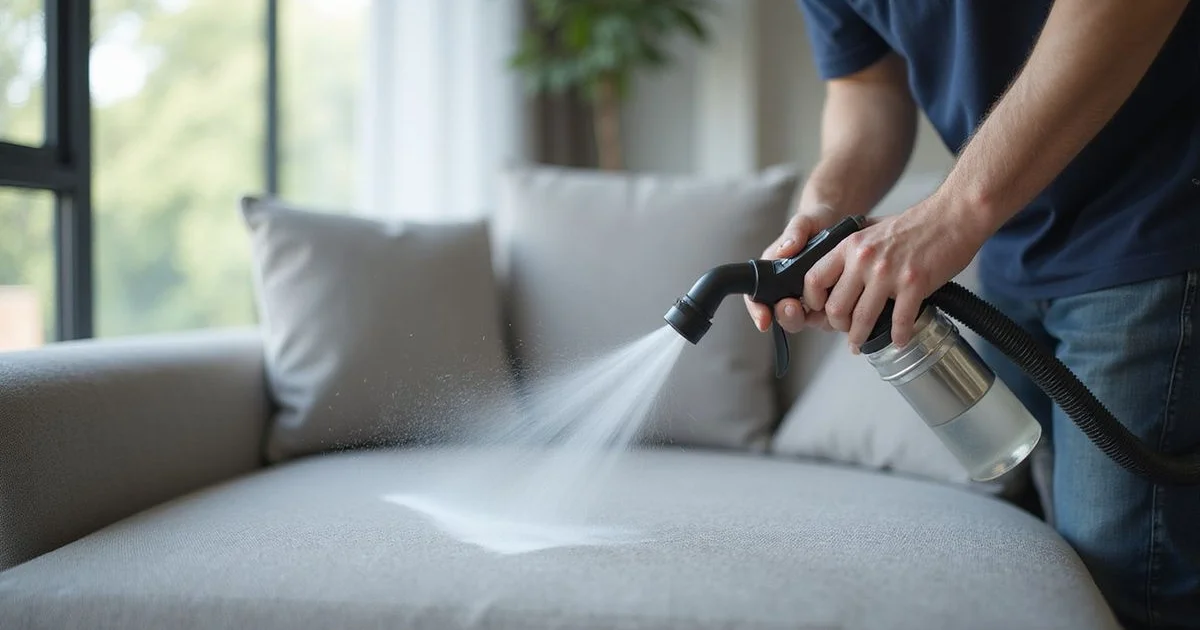
Hot extraction is a deep-cleaning method that forces heated water and cleaning agents into fabric, agitates the fibres, and immediately vacuums the mixture back out. This powerful suction pulls out embedded dirt, dust mites, allergens, and odour-causing bacteria.
Many people call this “steam cleaning,” but the water temperature actually stays just below boiling to protect synthetic fibres from melting.
The standard process follows four distinct steps:
- Inspection: Technicians identify the specific fabric type, locate heavy stains, and note potential problem areas.
- Pre-treatment: Specialized stain removers are applied to heavily soiled spots for extra breakdown power.
- Hot extraction pass: The machine sprays the heated solution, agitates the fabric pile, and extracts the moisture simultaneously.
- Drying: We set up controlled ventilation in the room to help the remaining surface moisture evaporate quickly.
Modern commercial extraction units are incredibly efficient and leave very little residual water behind.
Older wet shampoo methods often soaked furniture for days.
With current technology, a standard fabric sofa in a well-ventilated KL condo typically dries completely within four to six hours.
What it reaches that surface cleaning doesn’t
Surface vacuuming only handles the very top layer of debris, while hot extraction penetrates deep into the cushioning layers. A standard home vacuum simply lacks the suction power and fluid dynamics required to flush out embedded contaminants.
This table compares what each cleaning method actually removes.
| Cleaning Method | What Gets Removed | What Gets Left Behind |
|---|---|---|
| Surface Vacuuming | Loose surface dust, pet hair, top-layer skin cells. | Embedded allergens, deep stains, oils, dust mites. |
| Hot Extraction | Dust mites, their waste, embedded allergens, body oils, organic matter, shallow stains. | Deep set-in chemical stains, permanent fabric dyes. |
The most critical difference lies in the removal of dust mite waste.
This microscopic matter sticks tightly to fabric fibres and requires the agitation of heated water to properly break loose.
When to schedule
The ideal cleaning schedule depends entirely on your household’s daily habits and specific health needs. We generally recommend annual cleanings as a baseline for most urban homes.
For sofas
For homes in KL, an annual professional cleaning is the absolute minimum requirement to prevent odour buildup. You should increase this to every six months if your household includes young children, indoor pets, or frequent guests.
Many Mont Kiara residents also book a sofa hot extraction kl session just before hosting major holiday gatherings.
It is also a smart preventative measure after any severe respiratory illness in the family.
For mattresses
Every mattress in your home should undergo deep extraction at least once a year. Households with asthma or severe allergies benefit greatly from scheduling this service every six months.
Property managers find this essential for move-in preparations, especially when new tenants occupy a previously used furnished unit.
A deep clean is also highly recommended after recovering from a prolonged sickness.
For curtains
Curtains act as massive air filters, so they need attention annually as part of a seasonal household deep clean.
Heavy fabrics trap airborne dust from ceiling fans and open windows constantly.
Scheduling a refresh right before festive seasons ensures your living spaces look and smell perfectly clean.
What it does for health
Professional hot extraction drastically reduces the indoor allergens that trigger respiratory issues. By physically washing the deep layers of your soft furnishings, you remove the microscopic particles that degrade your daily air quality.
This goes far beyond just improving the visual appearance of a room.
- Reduces dust mite population: This directly lowers the daily triggers for asthma and chronic allergy sufferers.
- Eliminates allergen reservoirs: Dust mite waste ranks as one of the strongest and most persistent indoor allergens.
- Removes microbial colonies: The heated water destroys the mould and bacteria cultures that thrive in our damp local conditions.
- Improves indoor air quality: By extracting these settled allergens permanently, they cannot be kicked back into the breathable air when someone sits down.
For households dealing with morning congestion or sensitive skin, this specific treatment provides the single highest-impact improvement to your indoor environment.
What it can’t fix
While hot extraction is incredibly effective, it cannot reverse permanent physical damage or lift chemically set dyes. It is important to have realistic expectations before the treatment begins.
Certain conditions require specialized restoration or complete replacement instead of standard cleaning.
- Set-in deep stains: Old wine spills, heavy grease, or permanent ink markers may lighten but will often not lift entirely.
- Structural damage: Torn fabric weaves, sagging foam, or broken internal springs require an upholsterer, not a cleaner.
- Permanent odours: Smells from heavy pet urine or years of indoor smoking that have penetrated the deep structural foam usually require professional restoration.
- Furniture beyond economic restoration: For heavily degraded vintage items, buying new furniture is often more cost-effective than attempting intensive salvage cleaning.
We always inspect items closely before starting.
The technicians will tell you clearly and honestly if a particular piece of furniture is borderline or unlikely to respond well.
How we quote
Pricing is calculated based on the specific item being cleaned rather than charging a flat hourly rate per home. Common furnishings have standard, transparent rates, while oversized or highly unusual items receive custom quotes based on their dimensions.
This targeted service works perfectly as a standalone appointment, or we can seamlessly roll the work into a comprehensive deep cleaning package.
Requesting a precise estimate takes only a few minutes.
Just WhatsApp us with a few clear photos of your items and a brief description.
Please include the fabric type, approximate size, and any specific stain concerns you have so our team can provide an accurate quote quickly.